Phi Phi with Kids: Snorkelling Ages and Safety Guide
12 min read
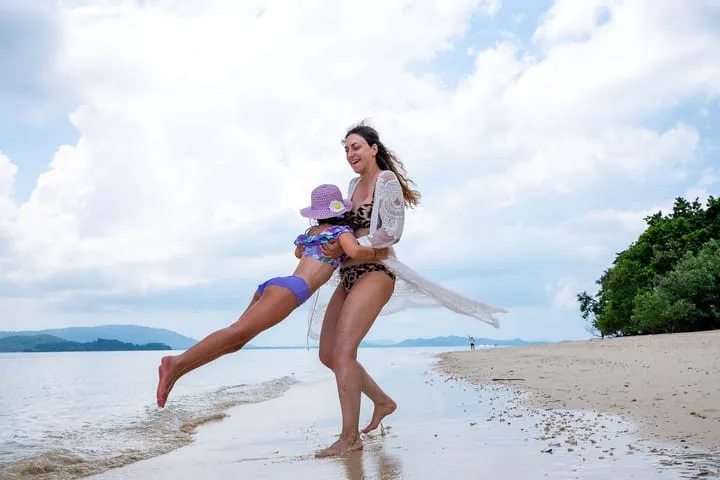
Phi Phi with kids can be one of the best days of a family holiday in Phuket, and it can also be a long, hot, tiring one if you pick the wrong trip. A speedboat day means an early start, open sea, strong sun, water that is deeper than a hotel pool and a group of strangers. None of that is a reason to stay on the beach, but it is a reason to choose carefully and to know the rules before you board.
This guide covers the ages and conditions on our trips, which excursion suits younger or older children, what Thailand’s snorkelling rules say about life vests and the reef, and how to deal with sun, heat and seasickness. The trips we link are run by Simba Sea Trips, an independent local operator; we list them on this website with live availability and secure online payment. What we say about the trips comes from the trip pages; what we say about rules and health comes from the official or reliable sources listed at the end. This is travel information, not medical advice: for babies, health conditions or medication, ask your paediatrician.
The short version
- Ages on our shared trips: adults 13 and over, children 4 to 12, infants 0 to 3 (free). Every trip page says children must be accompanied by an adult.
- The days are long: about 8 hours for the sunrise and Phang Nga trips and about 8.5 hours for the sunset trip. The shortest option is a private sunset cruise of about 4.5 hours, which does not include snorkelling.
- Life vests: under rules in force since April 2025, snorkellers near coral reefs must be given a life vest and wear it at all times.
- Sun and heat: young children depend on adults to keep them cool, hydrated and covered, and babies under six months should be kept out of direct sun.
- Reef: no touching, no feeding, and check that your sunscreen is allowed in Thailand’s national parks.
Ages and rules on our trips
Our three shared trips to Phi Phi and Phang Nga price three age groups: adults 13+, children 4 to 12 and infants 0 to 3, who go free. From 13 the ticket is the adult one, which matters when you budget for teenagers. The five private charters have a single guest category with no child price: the price depends on the size of the group, and the calendar shows the total for your party.
The trip pages do not set a minimum age for snorkelling beyond these categories, and they do not describe lifejacket sizes for small children. If your child is very young, or not yet comfortable in the water, read the page carefully and decide whether a full day at sea suits them. You can always spend the snorkelling stops in the boat’s shade and let the older ones swim.
Other conditions that appear on every trip page:
- Health: not recommended for pregnant travellers or people with heart or back problems; not wheelchair accessible.
- Hotel pick-up: complimentary anywhere in Phuket (outside Phuket an extra charge applies depending on the distance, and the operator confirms the exact amount). The operator sends the exact pick-up time the day before, which saves you taxis with tired children.
- Guides: English and Thai on the shared trips; the private sunrise charter is guided in English.
A small detail about park fees: where the fee is paid on the day, the park website defines a child as aged 3 to 14, while the operator’s price categories use 4 to 12 and 13+. Check the amount for each child’s age (see the checklist below).
Which trip suits which children
Toddlers and young children. Be honest about what they can enjoy for eight hours. The Phi Phi sunrise trip leaves Phuket before dawn: the boat departs at about 06:00 and the operator sends the pick-up time the day before, so the wake-up is early. In return you travel in the cooler morning hours and reach Maya Bay before the day-trip boats. The day includes a swim in Pileh Lagoon, two snorkelling stops of about 45 minutes and time on the private island of Rang Yai; the trip page lists breakfast, snacks and fruit, lunch, bottled water, coffee and tea, and a toilet and Wi-Fi on board.
The Phi Phi sunset and shark spotting trip starts later in the morning (the calendar shows the start time), runs from November to April and takes about 8.5 hours. Snorkelling equipment, lunch, drinks and snacks, national-park fees and accident insurance are listed as included. It is longer and ends after sunset, so younger children may be exhausted on the way back. It also includes a stop at Shark Bay, where blacktip reef sharks are spotted: some children will love it and others will be nervous, so decide with them beforehand.
Older children and teenagers. They will get the most from the sunrise or sunset Phi Phi days, with real snorkelling time. The James Bond Island and Phang Nga Bay small-group trip is more of an exploring day than a snorkelling one: kayaking into the hidden lagoon of Koh Panak and the caves of Koh Hong, James Bond Island, a swim at Kudu Island and a Thai lunch on the beach, in about eight hours, with kayaking and national-park fees listed as included. It suits children who like boats and adventure more than fish.
Families who want control of the group. On a private charter the boat is just your group, so you are not waiting for strangers to finish a stop. Two options stand out for families:
- The private Coral Islands snorkel charter visits the quieter coral islands of southern Phuket (Mai Thon, Coral and Rang Yai) for about seven hours of clear-water snorkelling at your own pace. According to the operator, the national-park fee and lunch are paid separately on this one, so read the trip page before booking.
- The private Phang Nga Bay sunset charter is the shortest day we offer: about four and a half hours, leaving at 14:30, with Koh Panak, the floating village of Koh Panyee, James Bond Island and dinner at the end. It has no snorkelling, but it is an easy first boat day with small children.
There is also the private Phi Phi sunrise charter, the same route as the shared sunrise trip for your group only, guided in English. See all our private charters in Thailand.
Our shared trips from Phuket for families
 Phi Phi Sunrise from Phuket: Maya Bay Before Crowds8 h · Hotel pick-upfrom €145.23 / personCheck availability
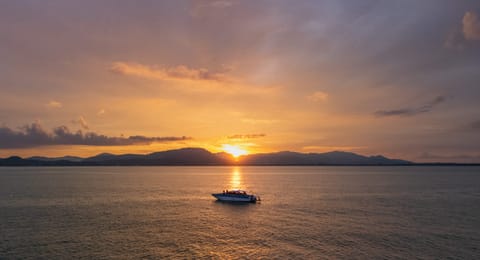 Phi Phi Sunset & Shark Spotting from Phuket8 h 30 · Hotel pick-upfrom €131.56 / personCheck availability
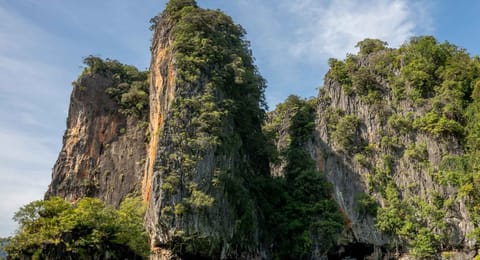 James Bond Island & Phang Nga Bay, Small Group8 h · Hotel pick-upfrom €123.08 / personCheck availability
Life vests and supervision in the water
Thailand tightened its diving and snorkelling rules in 2025. According to a summary published by the Tourism Authority of Thailand, the rules issued by the Ministry of Natural Resources and Environment took effect on 22 April 2025 and say that:
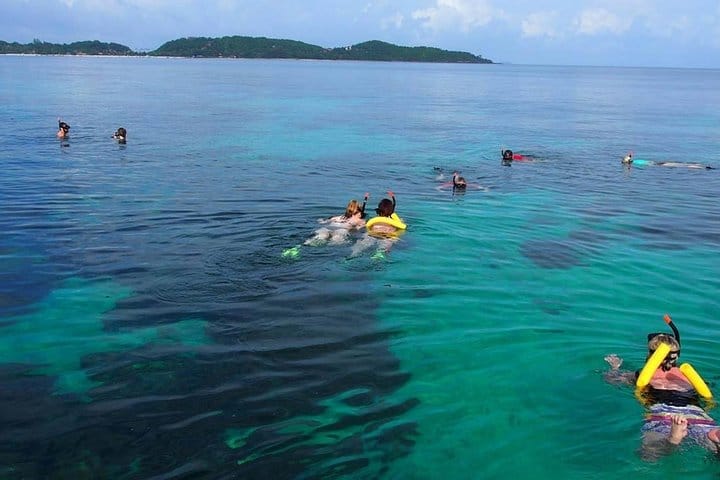
- snorkellers near coral reefs must be given life vests and wear them at all times, unless they hold a recognised freediving certificate;
- one supervisor may oversee up to 20 snorkellers, and supervisors must brief participants before the activity;
- a tourist who refuses to wear a life vest or touches coral must have their activity suspended immediately.
For families this is good news: the vest is not optional, for you or for the children. Ask the crew at the briefing to check that the vest fits each child before anyone gets in the water, and do not let a child take it off “just for a photo”.
The World Health Organization notes that the risk of drowning increases when children interact with water without active adult supervision (WHO). A guide watching twenty swimmers is not a substitute for you. Our suggestion: one adult per young child in the water, within arm’s reach, and agree on a signal to come back to the boat. For school-age children, the WHO also recommends teaching basic swimming and water-safety skills, so a few practice sessions with a mask and snorkel in the hotel pool before the trip are time well spent.
Snorkelling with respect for the reef
The same rules protect the reef, and children can follow them easily if you explain them in the boat:
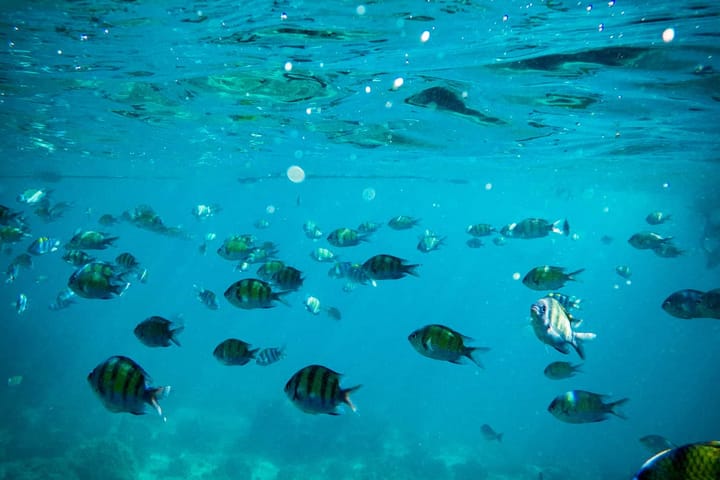
- Look, do not touch. The summary says contact with marine organisms is forbidden under all circumstances. That includes picking up starfish or coral “to show”.
- Do not feed the fish. Feeding fish, littering or disturbing reef habitats is not permitted in reef areas.
- Kick gently. Stirring up sediment with the fins is also banned, so stay horizontal and avoid kicking near the bottom.
- Mind your sunscreen. Thailand’s national parks ban sunscreens that contain four chemicals, including oxybenzone and octinoxate; The Thaiger reported in August 2021 fines of up to 100,000 baht. Read the label of every product you pack, children’s sunscreen included, and apply it at the hotel rather than on the boat.
Sun, heat and seasickness
Sun. The US Centers for Disease Control and Prevention advise travellers to use broad-spectrum sunscreen with SPF 15 or higher, apply it at least 20 minutes before going outside, reapply at least every two hours and after swimming, wear a wide-brimmed hat and stay in the shade between 10 am and 4 pm (CDC). The American Academy of Pediatrics adds that babies under six months should be kept out of direct sun, using shade and clothing, with sunscreen only on small areas if nothing else is available, and notes that UV rays reflect off water (HealthyChildren.org). On an open boat there is little shade, so a long-sleeved swim top for the children is worth packing.
Heat. The CDC points out that infants and young children rely on others to keep them cool and hydrated: make sure they drink plenty of fluids, dress them in loose, lightweight, light-coloured clothing and seek medical care immediately if you see signs of heat-related illness (CDC). Bottled water is listed as included on the sunrise trip and drinks on the sunset trip, but bring your own for children who only drink what they know.
Seasickness. According to the CDC, motion sickness is more common in children aged 2 to 12; looking at the horizon, eating small amounts often and ginger lozenges can help, while some medicines are not recommended for children, so talk to a doctor about any remedy and the right dose before the trip (CDC). The sea matters too: the Thai National Parks website says boats run less often in the rainy season and may be cancelled in bad weather.
When to go with children
The Thai National Parks website says snorkelling is at its best from about November or December to May, with clearer, calmer water (Thai National Parks). The sunset trip only runs from November to April. In August and September Maya Bay is closed to visitors, and our Phi Phi trips visit Bamboo Island instead, seeing Maya Bay from the boat. For rain, rules and the sharks, read our guide to the Phi Phi Island tour from Phuket.
Checklist for the day
- Bring: your passport number (not the passport itself), swimwear, a towel, a hat and sunglasses, a long-sleeved swim top, a change of clothes for the way back, a camera or phone, and some cash for tips and extras.
- Sunscreen: check the label against the park ban and apply it before boarding, not in the water.
- Water and snacks: the trip pages list meals and drinks, but bring your own water and a snack for children who eat little.
- Seasickness: speak to your doctor beforehand about what is suitable for your child.
- Vests: ask the crew to check the fit for every child at the briefing.
- Park fee: on trips where it is not included, confirm the amount for each child’s age. For Phi Phi Don, Phi Phi Leh and Mai Phai, The Thaiger reported in February 2024 a special service fee of 400 baht for foreign adults and 200 for children, on top of the general entry fee of 200 and 100 baht; amounts can change.
- Not included: alcoholic drinks and tips for the crew.
- Minimum numbers: the operator may reschedule a shared trip if fewer than six seats are booked, as stated on each trip page.
Not sure where to stay or which beach to use as a base? Read the Phuket destination guide or browse all our trips from Phuket.
Quick answers
- What age can children go on a Phi Phi boat trip? On our shared trips there is an infant category for ages 0 to 3 (free), children 4 to 12 and adults 13+. The trip pages set no other minimum age; children must be accompanied by an adult.
- Is Phi Phi suitable for toddlers? It is possible, but the days last 8 to 8.5 hours, with sun, heat and sea. For a first boat day with small children, the 4.5-hour private sunset cruise in Phang Nga is the easiest, although it has no snorkelling.
- Do children have to wear a life vest while snorkelling? Under the rules in force since 22 April 2025, snorkellers near coral reefs must wear one at all times unless they hold a recognised freediving certificate.
- Can I use any sunscreen? No. Thailand’s national parks ban sunscreens with four chemicals, including oxybenzone and octinoxate.
- Which trip has the most snorkelling? The sunrise and sunset Phi Phi days and the private Coral Islands charter.
Sources
- Stricter regulations for diving activities now in effect in Thailand, Tourism Authority of Thailand, May 2025 (life vests, contact with marine life, feeding, supervisors; read 30 October 2026).
- Hat Noppharat Thara – Mu Ko Phi Phi National Park, Thai National Parks (season, boats, fees and child age for fees).
- Thailand’s national parks ban the use of some sunscreens containing particular chemicals, The Thaiger, 4 August 2021.
- Krabi national park makes astonishing revenue in tourism boom, The Thaiger, 24 February 2024 (service fee for the Phi Phi islands).
- Sun exposure and Motion sickness, CDC Travelers’ Health; Infants and children and heat, CDC.
- Sun safety, HealthyChildren.org (American Academy of Pediatrics).
- Drowning, World Health Organization.
- Our trip pages (supplier information in Bókun), read on 30 October 2026.