Dolphins in the Strait and Costa del Sol: Rules and Guide
11 min read
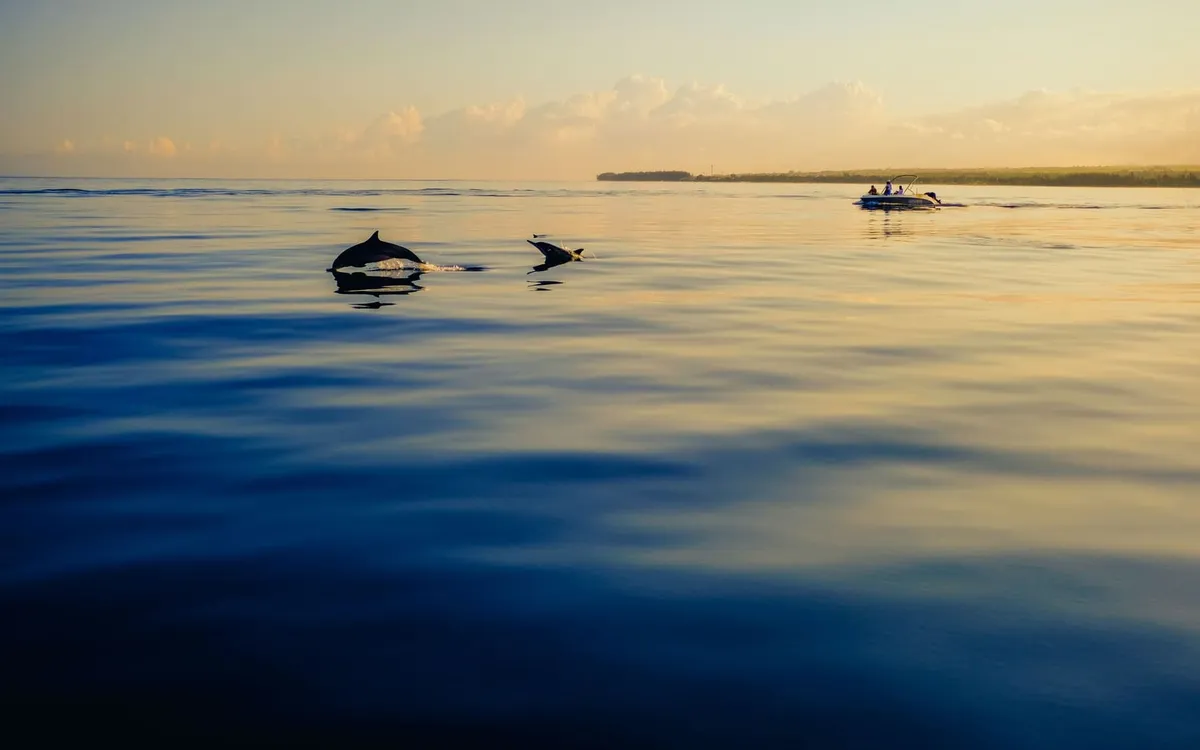
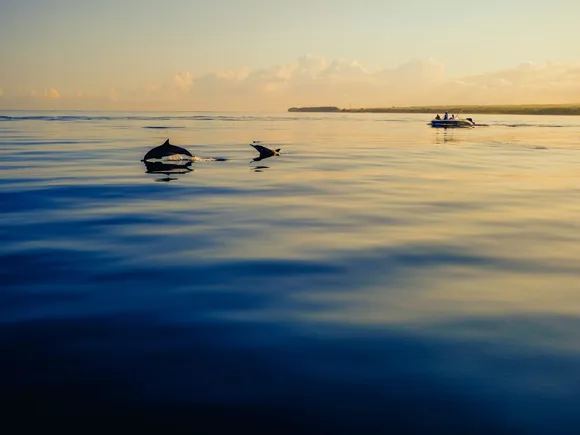
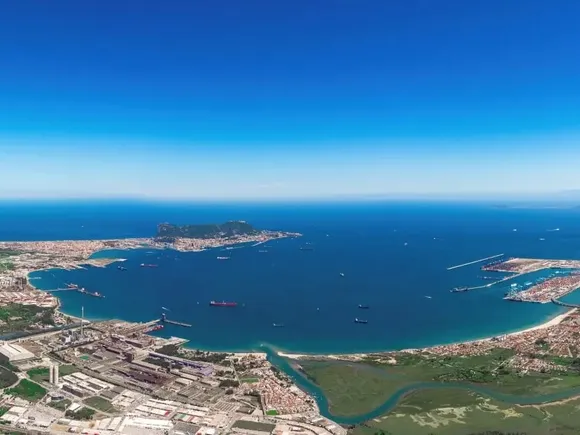
Between Marbella and Barbate, along barely a hundred kilometres of coast, two seas, two continents and one of Europe’s busiest marine wildlife corridors come together. The dolphins seen from Estepona and Sotogrande, those of the Bay of Algeciras (off Alcaidesa, La Línea and Gibraltar), those of the Strait of Gibraltar itself (Tarifa, and Ceuta and Tangier on the southern shore) and those that drift into the Atlantic by Barbate and the Gulf of Cádiz all pass through these waters.
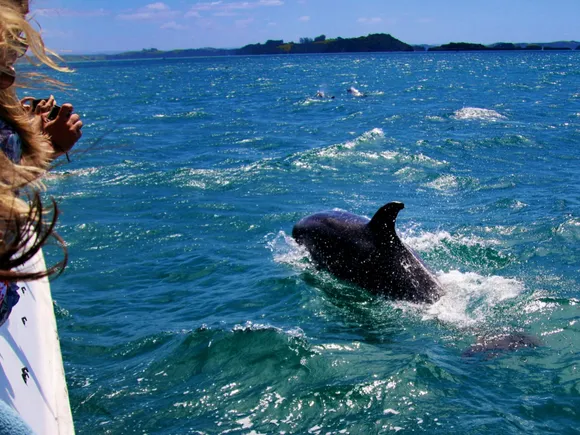
Seeing dolphins in the wild is an experience you remember, and it is also an activity regulated by law. The difference between a respectful trip and one that disturbs the animals lies in details that are rarely explained: how close the boat gets, how fast, how many vessels can be there at once. And those rules change depending on the waters you are in: they are not the same in Spanish waters as in Gibraltar’s or Morocco’s.
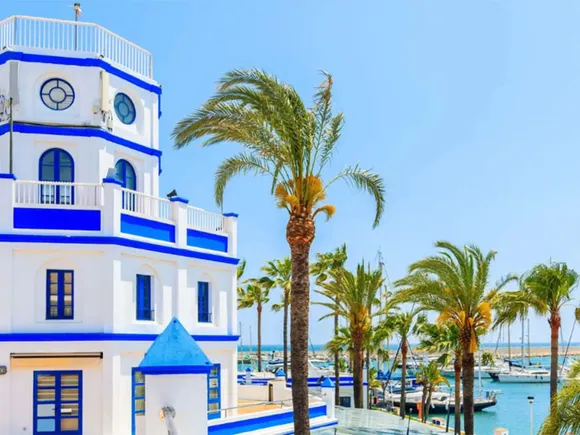
We are Sailing Beyond Limits and we sail from Sotogrande Marina and Estepona Marina. Before we talk about ourselves, the important point: the presence of wild animals is never guaranteed, and anyone who promises a sure sighting is selling something they cannot deliver.
A corridor, not a point: zone by zone
Dolphins do not care about borders or municipalities. Here is what the official and scientific sources we have been able to check say, from west to east. Where there is no verifiable data, we say so.
Marbella, Estepona and Sotogrande (the Alborán Sea coast). According to an IUCN fact sheet on the common dolphin in the Alborán Sea, this is the part of the Mediterranean with the highest densities of the species, where «it is easy to see groups of several hundred animals». The same sheet notes that the Alborán common dolphin is genetically closer to the Atlantic one than to the rest of the Mediterranean, suggesting heavy exchange through the Strait. For the Málaga coast, the closest photo-identification work we found was done off Torremolinos, Benalmádena and Fuengirola in 2015: 210 bottlenose dolphin sightings between May and October and 79 identified individuals, with the bottlenose the most-sighted species in the study area. We have not located a study specific to Marbella or Estepona, so we give no figures for those waters.
Alcaidesa, La Línea and the Bay of Algeciras. The bay and its surroundings are among the most-studied parts of the Strait. Published work lists the common, bottlenose and striped dolphin among the usual species and points to the pressure of shipping on the area (more below).
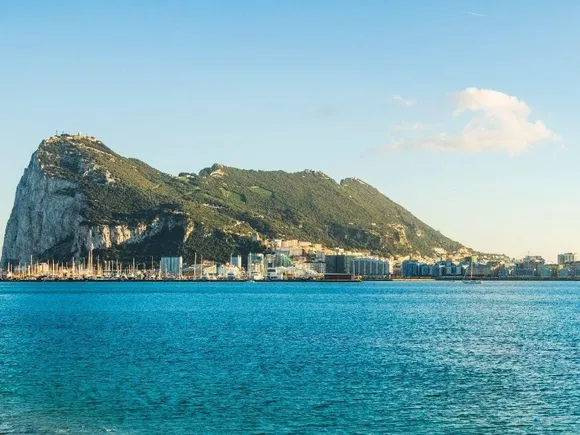
Gibraltar. Gibraltar protects cetaceans in its territorial waters with its own rule, the Cetacean Protocol, explained in a section further on.
The Strait and Tarifa. The Spanish shore of the Strait between Algeciras and Tarifa is the Strait Natural Park (19,177.29 ha according to the official fact sheet of the Junta de Andalucía), and cetaceans are among its conservation priorities. The sheet lists among its marine fauna the fin whale, the sperm whale, the bottlenose dolphin and the harbour porpoise.
Ceuta and Tangier. They are the southern shore of the Strait. A 2014 scientific campaign in the southern Alborán Sea (Ceuta and the Moroccan coast) recorded 178 cetacean sightings, 51 of them bottlenose dolphins, and found that some animals identified off Ceuta belong to the Strait of Gibraltar catalogue, which holds 450 individuals. Ceuta is Spanish territory, so Spanish rules apply there; we could not verify Moroccan rules for Tangier and its coast, so we do not summarise them.
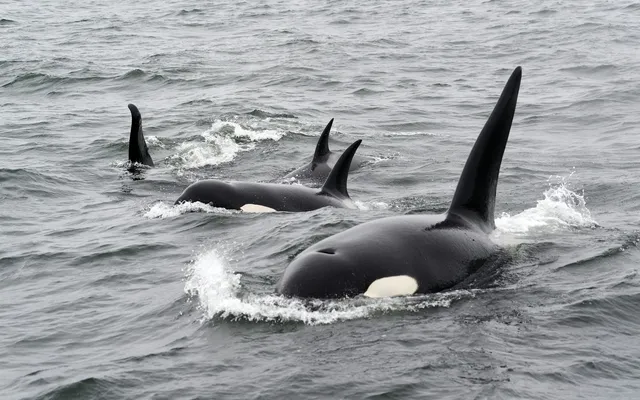
Barbate and the Gulf of Cádiz. On the other side of the Strait, in the Atlantic, this is where the Ministry documents the presence of orcas between April and August (see the orca section).
Which dolphins can you see
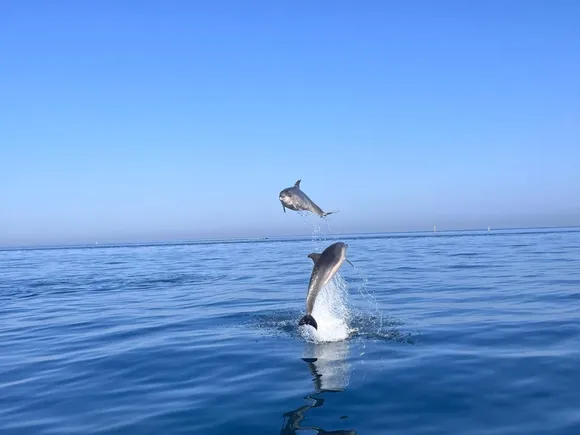
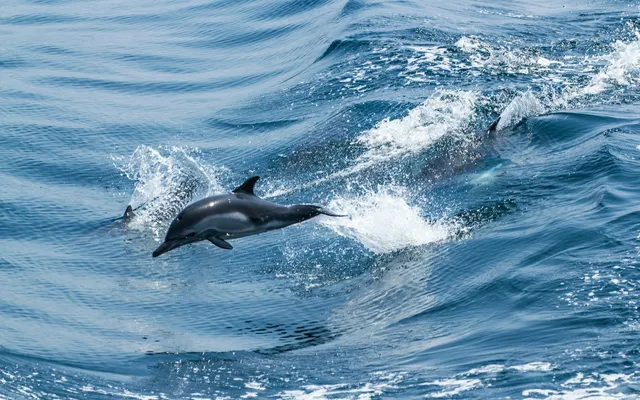
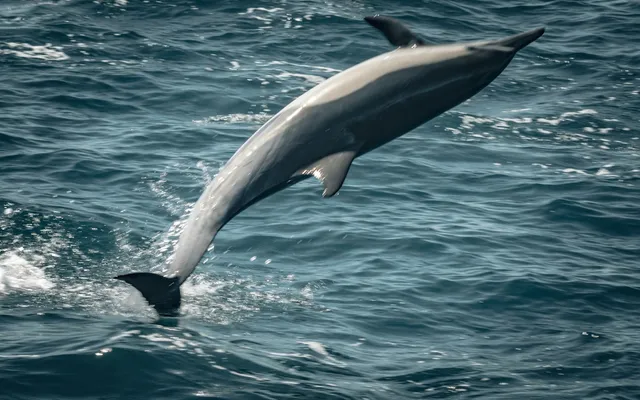
Scientific studies of the Strait agree that four cetacean species are resident: the common dolphin, the striped dolphin, the bottlenose dolphin and the long-finned pilot whale. Three others (orca, sperm whale and fin whale) are semi-resident or migratory. One of those studies notes that six of the seven species observed appear regularly throughout the year, including the three dolphins.
Two cautions:
- Those studies date from 2002 to 2007: they describe which species are present, not what you will see on the day you go.
- The Mediterranean common dolphin is a species in trouble: the IUCN classes its Mediterranean subpopulation as «Endangered», after a decline of more than 50 % over 40–50 years, with accidental catches, overfishing of small pelagic fish and chemical pollution as the main threats. In the Alborán Sea, according to the same sheet, it remains abundant.
A very busy sea
The Strait is also one of the busiest sea passages in the world. According to Salvamento Marítimo data, the Tarifa centre monitored 76,065 vessels in the Strait’s traffic separation scheme in 2022. For dolphins, noise and collisions are real threats, and it is one more reason for recreational boats to behave carefully. For you, it means it pays to go out with someone who knows the area.
What the law says in Spain: Royal Decree 1727/2007
In Spanish waters, Royal Decree 1727/2007 of 21 December applies (text on the BOE, in Spanish). It creates the Mobile Cetacean Protection Space: a zone that follows the animals wherever they are and in which conduct rules apply. With the exact figures from the text:
The zones. The protection space is a volume with a 500 m radius around the animal or group, 500 m up and 60 m down. A «group» is two or more animals within 50 m of each other.
| Zone | Distance from the animal | What is allowed |
|---|---|---|
| Exclusion zone | 60 m or less | Entering or staying is prohibited, except in an emergency |
| Restricted permanence zone | 60 to 300 m | At most 2 vessels at a time; entry prohibited if there are isolated calves or adults with calves |
| Approach zone | 300 to 500 m | At most 2 vessels waiting to enter, and only while others are in the previous zone |
How the boat must behave (annex II of the Decree):
- Constant speed, no more than 4 knots, and never faster than the slowest animal in the group.
- A gentle, converging approach at about 30°, never head-on, from behind or across their path.
- A parallel course during observation, with no sudden changes of heading or speed.
- No reversing, except in an emergency or to avoid a collision, and no circling an animal.
- If an animal comes within 60 m, put the engine in neutral or stop it. For dolphins and porpoises you may keep the same speed and heading.
- Vessels approaching the same group must coordinate by radio.
- In the exclusion zone, sonar and echo sounder must be off.
- If an animal shows signs of disturbance, leave the protection space as soon as possible.
What is prohibited: touching the animals, feeding them or throwing food or rubbish, separating a group or coming between a mother and her calf, making loud noises or emitting sounds to attract or repel them, and swimming or diving in the exclusion zone.
The Spanish text sets no maximum observation time. And it may change: the Ministry opened a public consultation to amend it, although the 2007 text remains in force.
And in Gibraltar? A similar protocol, with differences
If you sail in Gibraltar’s territorial waters, the Gibraltar Government’s Cetacean Protocol applies, enshrined in schedule 2 of its Marine Protection Regulations 2014. It is very similar to the Spanish one (a cylinder of 500 m radius, 500 m high and 60 m deep, a 60 m exclusion zone, a 4-knot maximum, a ban on bathing in the exclusion zone, approach at an angle of at least 30°), but it differs in the restricted access zone:
- Only one vessel at a time may stay in that zone, for no more than 20 minutes; then it must leave the protection space.
- After two successive entries by two different vessels, the group must not be approached for 30 minutes.
- Entry is prohibited if the animals are feeding or moving away, or if there are adults with young or young on their own.
It is the best proof that «the rules» depend on the waters: in Spain, up to 2 boats and no time limit; in Gibraltar, one boat and 20 minutes.
Orcas in the Strait and the Gulf of Cádiz: what sailors should know
If you plan to sail on your own through the Strait or off Barbate, there is a safety issue. According to the Ministry for the Ecological Transition, the orcas of this population (listed as vulnerable) regularly use Atlantic waters from the Strait along the Gulf of Cádiz, following the bluefin tuna, with the highest presence from April to August. Since summer 2020 there have been interactions with sailing boats, which the Scientific Committee of the International Whaling Commission has called «serious and persistent».
The official recommendations for sailors include avoiding the delimited zone between April and August, staying as close to the coast as safety allows and, if an interaction occurs, not stopping the boat, heading for shallower water, keeping people away from the sides and notifying the Rescue Coordination Centre on VHF channel 16. No deterrents that could harm the animals should be used. Always check the Ministry page, as it is updated.
Who can run a commercial dolphin-watching trip?
According to MITECO, recreational cetacean watching (AROC) requires prior authorisation from the Ministry under Law 41/2010 on marine protection, and authorised companies must report their sightings every six months.
That gives you a useful question before booking: does the company hold AROC authorisation? It is a fair question and a serious operator will know the answer.
How to recognise a responsible trip
This is no longer the law, but our editorial view:
- It doesn’t promise sightings. It talks about «chance», not «guarantee».
- It doesn’t chase the dolphins. It approaches slowly and stays parallel; if they move away, it doesn’t insist.
- It doesn’t let you swim with them or touch them, and it forbids feeding.
- Small groups and few boats at a time.
- It explains the rules before sailing and follows them.
- It is transparent about its authorisation and what the trip includes.
What to expect on an ordinary day
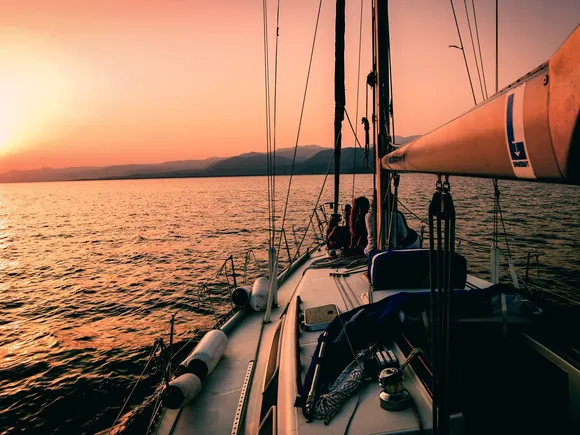
Dolphins live in the Strait all year, but not every trip has a sighting. The state of the sea, visibility, the wind (the levante is the main thing we watch here) and where the animals are that day all matter. In our experience, spring to autumn usually brings the best sea conditions, and sunset adds a very special light; but we make no promises.
If it isn’t a sighting day, the trip is still what it is: sailing the Strait, with the Rock of Gibraltar on one side and, on a clear day, the mountains of Africa in the distance. More on the area in our Sotogrande port guide, our Estepona port guide and the guide to what to see and do in Sotogrande, Estepona and Manilva.
Frequently asked questions
Can you swim with dolphins in the Strait?
Not in the exclusion zone (60 m or less from the animal): swimming or diving there is prohibited by both Royal Decree 1727/2007 and Gibraltar’s protocol. Touching or feeding the animals is also prohibited. A responsible trip does not offer swimming with dolphins.
Is seeing dolphins guaranteed?
No. They are wild animals. Studies indicate that several species are in the Strait all year, but that does not ensure a sighting on a particular trip. Be wary of anyone who guarantees it.
Do you see dolphins from Marbella, Estepona or Sotogrande?
Sources cite bottlenose, common and striped dolphins off the Alborán Sea coast, and a 2015 study off Torremolinos–Fuengirola recorded 210 bottlenose sightings between May and October. We have not found a study specific to Marbella or Estepona, so we give no figures for those waters.
Are the rules the same in Gibraltar, Ceuta or Tangier?
In Spanish waters, including Ceuta, Royal Decree 1727/2007 applies. Gibraltar has its own protocol, similar but with different limits (one boat at a time and 20 minutes). We could not verify Moroccan rules.
How fast should a boat go near dolphins?
At a constant speed of no more than 4 knots, never faster than the slowest animal in the group, with a gentle approach of about 30° to their path.
Is there a risk from orcas in the Strait?
The orca population of the Strait and the Gulf of Cádiz has interacted with sailing boats since 2020, mostly from April to August. The Ministry recommends avoiding the delimited zone on those dates and explains what to do if it happens. See its official page.
Sources
- BOE · Royal Decree 1727/2007 establishing cetacean protection measures (Spanish).
- MITECO · Recreational cetacean watching (AROC) and public consultation on its amendment (Spanish).
- MITECO · Orca population of the Strait of Gibraltar and Gulf of Cádiz.
- Government of Gibraltar · Cetacean Protocol (Marine Protection Regulations 2014).
- Junta de Andalucía · Natura 2000 fact sheet for the Strait Natural Park (ES0000337) (Spanish).
- IUCN · Fact sheet «Common dolphin in the Alborán Sea» (Spanish).
- Chronica Naturae 6 (2016) · Photo-identification catalogue of the bottlenose dolphin off Torremolinos, Benalmádena and Fuengirola (Spanish).
- Almoraima 47 (2017) · «From Ceuta to Saidia, movements of bottlenose dolphins in the southern Alborán» (2014 campaigns, Spanish).
- Almoraima · study on cetaceans of the Strait and Dialnet · article (data from 2002 to 2007, Spanish).
- Salvamento Marítimo · press release with 2022 data (number of vessels in the traffic separation scheme).
Rules last checked: 26 October 2026.