The Caribbean by Boat: Catamaran and Boat Trip Guide
11 min read
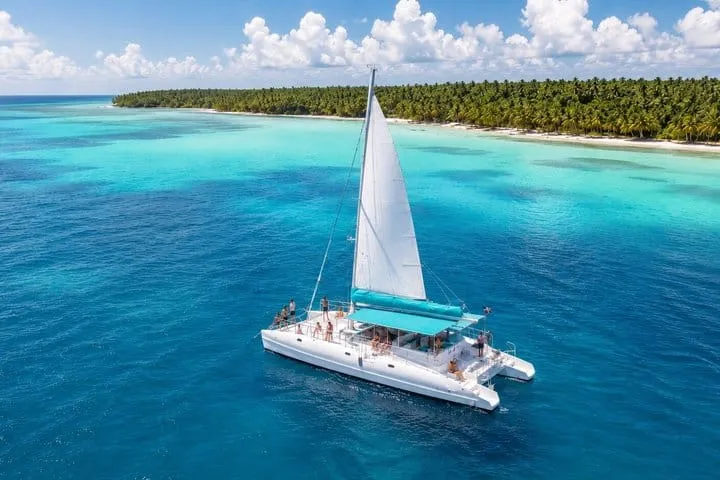
The Caribbean is not one place: it is a handful of coasts with their own character, joined by the same thing, a warm turquoise sea that is best enjoyed from the deck. In this guide we cover five Caribbean gateways from which we run boat trips: Punta Cana (Dominican Republic), Cancún and Isla Mujeres (Mexico), Montego Bay (Jamaica), San Pedro in Belize, and Cartagena de Indias (Colombia).
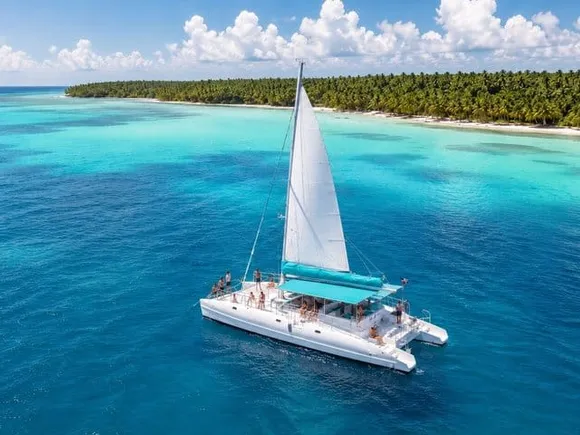
We are Sailing Beyond Limits. We won’t promise empty beaches or cloudless skies, but we will tell you what works: the best way to understand the Caribbean is to leave the airport, step on board and arrive by water at the places the road doesn’t reach, such as a sandbar in the middle of the sea, a coral reef or an island with a beach club in the shade of the palms. Here, destination by destination, is what to do, when to go, what to eat and which boat to choose.
Punta Cana: white sand, reef and party on board
Punta Cana is the Caribbean as you imagine it: white-sand beaches lined with palms, a sea of 27–29 °C almost all year and a coral reef that keeps the waters of Bávaro and Cap Cana calm and clear. The international airport is minutes from the resorts, so the holiday starts almost on landing.
What not to miss on land: the Hoyo Azul cenote at Scape Park (Cap Cana); the Ojos Indígenas Ecological Reserve, with twelve freshwater lagoons inside Puntacana Resort & Club; Cap Cana marina and Juanillo beach for sunset; and, if you have a spare day, Altos de Chavón, a stone village with an amphitheatre near La Romana, about an hour and a half away.
From the sea, Punta Cana comes in three flavours:
- Island trips. The catamaran to Saona Island and the Catalina Island beach day are the classics for nature and beach.
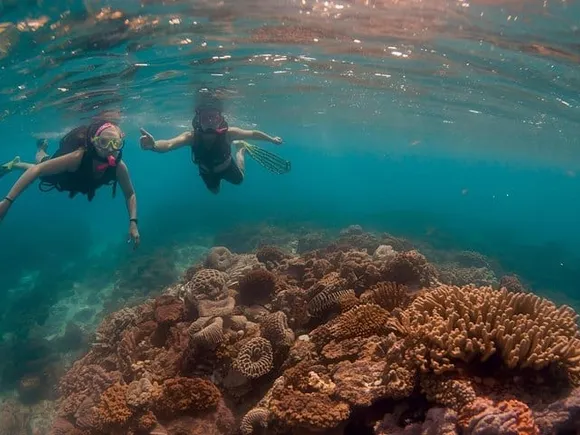
- Sandbar and snorkel. A shorter trip to the natural pool and sandbar, with a snorkel stop where the seabed is visible from the deck.
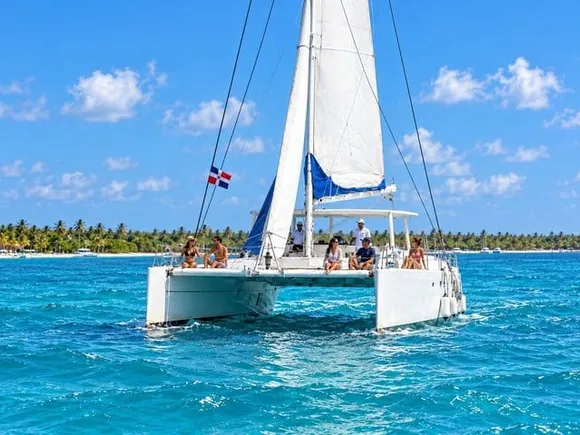
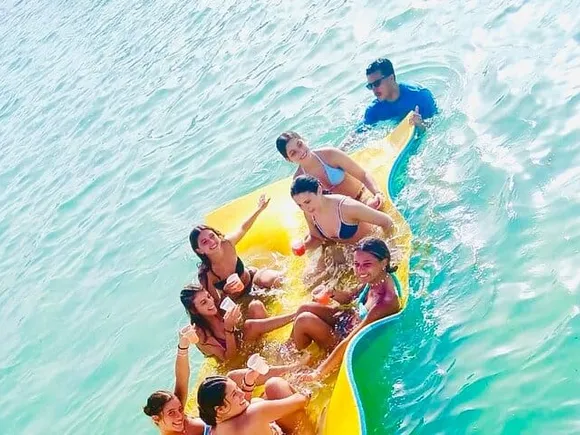
- Party boats. Our range of party boats with a sandbar stop includes shared catamarans, adults-only cruises and private boats. If you can’t decide, read our Punta Cana party boat guide.
You can also hire a private catamaran in Punta Cana for your group. Everything about the port and access is in our Punta Cana guide.
Cancún and Isla Mujeres: Mexico’s Caribbean and the Mesoamerican Reef
Cancún is the Mexican Caribbean turned up to full volume: a long white-sand barrier island, a lagoon behind it and a sea of 26–29 °C. Beyond the hotels, it is the gateway to Isla Mujeres and the Mesoamerican Reef, the second-largest barrier reef in the world, with excellent snorkelling a short boat ride away.
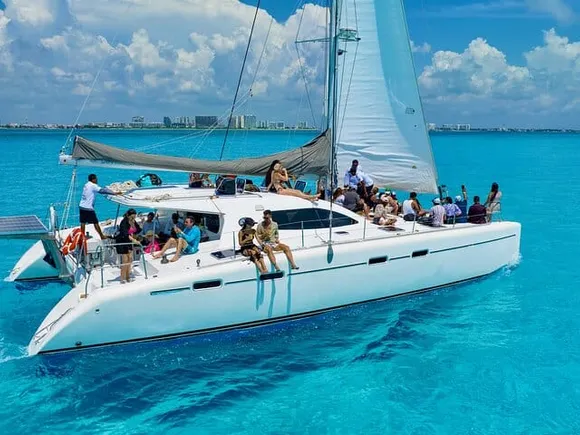
On land the classic plan includes Chichén Itzá (about two and a half hours by road; go early), Tulum and the cenotes, and the Underwater Museum of Art (MUSA), with hundreds of sculptures under the sea. By boat the star trip is Isla Mujeres, 20 minutes by ferry, though arriving by catamaran is a different thing: with music, snorkelling and time on the beach.
- Catamaran to Isla Mujeres for a group trip.
- Private sunset catamaran in Cancún, a trip just for you and yours.
In summer, roughly June to September, whale sharks gather near the coast; hurricane season runs from June to November and there is sometimes sargassum on the beaches between spring and summer, so keep dates flexible. More in our Cancún guide.
Montego Bay (Jamaica): reggae, rum punch and catamaran sunsets
Montego Bay, «MoBay» to Jamaicans, is the gateway to Jamaica’s north-west coast: white-sand beaches, warm water, reggae at every beach bar and an unhurried pace. It has an international airport (Sangster) a short way from the beaches and hotels, and is the easiest place to reach in Jamaica.
On land, relax at Doctor’s Cave Beach, stroll the Hip Strip (Gloucester Avenue), visit Rose Hall Great House and, if you have a day, head to Dunn’s River Falls, the Martha Brae river rafting or the sunsets of Negril.
From the water, the Montego Bay Marine Park protects reefs, seagrass beds and mangroves and is a good place for a first snorkel. Our trips:
- Sunset catamaran cruise, with golden light over the bay.
- Catamaran with snorkelling and live music, to combine sea and Jamaican atmosphere.
- Private catamarans with champagne at sunset, in the morning or afternoon.
More about the port and access in the Montego Bay guide.
Belize: the barrier reef from San Pedro
Belize is a small country with an enormous reef: the Belize Barrier Reef, a UNESCO World Heritage Site and one of the largest reef systems in the world. Our base is San Pedro, on Ambergris Caye, an island town of quiet streets, golf carts and a barefoot feel. English is the official language, which makes everything easier.
On the water, the big names are the Hol Chan Marine Reserve (coral gardens full of fish), Shark Ray Alley (snorkelling among nurse sharks and rays) and small, colourful Caye Caulker, with its «go slow» attitude. On the mainland, Maya ruins such as Altun Ha make a day trip.
- Hol Chan catamaran with snorkelling for a day on the reef.
- Sunset catamaran with ceviche, a four-hour private trip.
- Private catamaran with chef if you want to eat on board.
How to get there (small plane, water taxi) and the meeting point are in the Belize guide.
Cartagena de Indias: colonial walls and the Rosario Islands
Cartagena de Indias is one of the most beautiful cities in the Caribbean. Its walled old town, a UNESCO World Heritage Site, is a maze of coloured colonial houses, flowered balconies and lively squares. Visit the Castillo de San Felipe de Barajas, the largest fortress the Spanish built in the Americas, and wander Getsemaní, a neighbourhood of street art, bars and restaurants.
And behind the city, the sea: in under an hour a boat takes you to the Rosario Islands, with clear water, coral and beach clubs; at sunset, a catamaran crosses the bay with the Walled City glowing in golden light.
- Rosario Islands with 3 beach clubs: snorkelling, swimming and relaxing (check the fees payable on arrival).
- Sunset catamaran cruise.
- Private boat day to the Rosario Islands.
All the details are in the Cartagena guide.
Where to eat and what to try by the water
One of the best things about the Caribbean is that food and sea go together. Some ideas, destination by destination, without booking months ahead:
- Punta Cana and Cabeza de Toro. Beachfront restaurants in Bávaro and Cabeza de Toro, such as Captain Cook or Jellyfish, serve grilled fish and lobster with your feet in the sand. Try the fish with coconut, tostones, sancocho, mangú for breakfast and a very cold Presidente beer; if you dare, mamajuana, the typical herbal rum.
- Montego Bay. Jerk chicken or pork, Jamaican patties, fresh seafood and a cold Red Stripe on the beach. To end the day, a rum punch at sunset on the catamaran.
- Belize. Fresh ceviche, grilled fish, lobster in season and rice and beans, with a rum punch. On the private catamaran with a chef you can eat on board.
- Cartagena. Fresh seafood, ceviche and fried fish with coconut rice, with salsa and champeta at night. Getsemaní has a good cluster of bars and restaurants.
- Cancún and Isla Mujeres. On Isla Mujeres you eat well and unhurried after the beach; fresh fish and seafood are the safe bet.
A practical tip: eat where you see local people, ask for the catch of the day, and note that party trips usually include drinks and sometimes food; always check what each page includes.
Suggested itineraries: one to two weeks
The destinations in this guide are in different countries, so we combine them with flights. Always check connections, entry requirements and dates before booking; what follows are ideas of pace, not timetables.
One week in Punta Cana (7 days). Two days of beach and rest on arrival; one day trip to Saona or Catalina by catamaran; one day of sandbar and snorkelling or a party trip; one day of nature (Hoyo Azul or Ojos Indígenas); and finish with a sunset in Cap Cana. It is the easiest plan and needs the least logistics.
Ten days, Maya Caribbean (10 days). Four or five days in Cancún (Isla Mujeres by catamaran, Chichén Itzá or Tulum and cenotes) and four or five in Belize (San Pedro, Hol Chan, Shark Ray Alley and a day on Caye Caulker). Two of the best reefs in the Caribbean in a single trip.
Fourteen days, Caribbean of contrasts (14 days). A week in Punta Cana for rest and island trips, and a week in Cartagena for the colonial city and the Rosario Islands, or Montego Bay if you prefer reggae and jerk cooking. Three or four boat trips are enough: an island day, a sunset and a private boat day with your group.
Choose your season carefully: in all five destinations December to April is the driest, sunniest season, with the calmest sea and best snorkelling visibility. From May to November there is more rain and June to November is hurricane season, with fewer people and lower prices; if you travel then, check the forecast and each trip’s cancellation conditions.
The view from the sea: why the Caribbean is best lived afloat
Some things about the Caribbean only make sense from the water.
1. You reach places the road doesn’t. A sandbar, Punta Cana’s natural pool, the Hol Chan reef or an island beach club are reached by sea. A catamaran is a stable, shaded platform made for spending the day on board.
2. The colour of the water looks better from within. Beyond the coral barrier you can see the seabed from the deck and the turquoise shifts with depth. The same goes for the coast: from the boat the hotels disappear and the landscape remains.
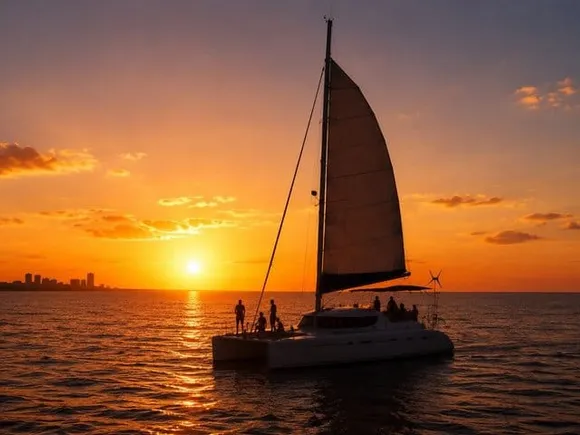
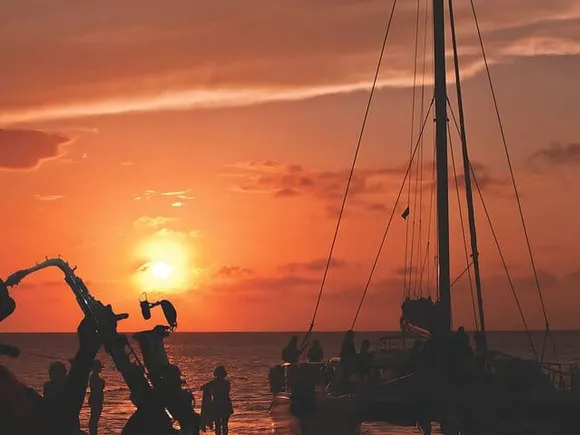
3. The sunset. In the Caribbean the sun sets early and fast; a catamaran sunset, drink in hand and the coast turning orange, is probably the best moment of the day.
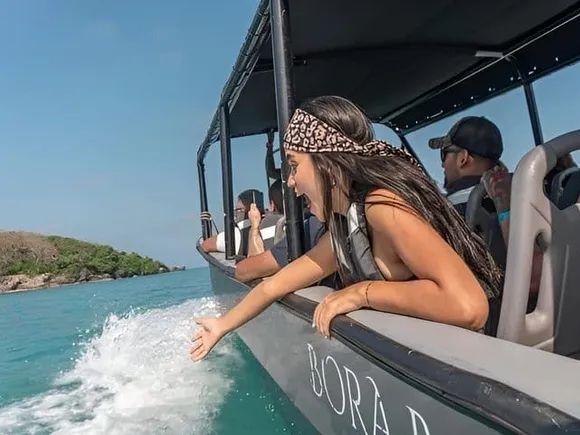
4. Every boat, a different plan. Shared to meet people, party with music and open bar, or private so you decide the pace, the stops and the menu. On our pages you always see the duration, what is included and live availability.
Prefer a boat for your group? See our private charters in Punta Cana, Cancún, Montego Bay and Belize. Prices, conditions and availability are shown on each page and you book online.
Frequently asked questions
What is the best time to sail in the Caribbean?
December to April is the driest, sunniest season in Punta Cana, Cancún, Montego Bay, Belize and Cartagena, with the calmest sea and best snorkelling visibility. From May to November there is more rain and humidity, and June to November is hurricane season, with fewer people.
Do I need a visa or any entry requirements?
It depends on your nationality and the country. Always check current requirements (passport validity, visa, entry forms or recommended vaccinations) with the consulate or the country’s official website before booking; they change often and we don’t want to give you outdated information.
How do I get to the departure points?
The international airports of Punta Cana, Cancún, Montego Bay (Sangster), Belize and Cartagena are a short way from the tourist areas. Each page and each port guide gives the meeting point; some trips include hotel pickup, and we confirm it after booking.
Are the trips suitable for children and non-swimmers?
Many trips are family-friendly, but not all: party boats and adults-only trips have age restrictions, and each page states its conditions. If your group includes children or someone who can’t swim, ask us before booking and we’ll help you pick the right trip.
What does a catamaran trip include?
It depends on the page: many include drinks, snorkelling and music, and some food or a guide; private charters usually include the captain and crew. Always check the «What’s included» section and the cancellation policy before booking.