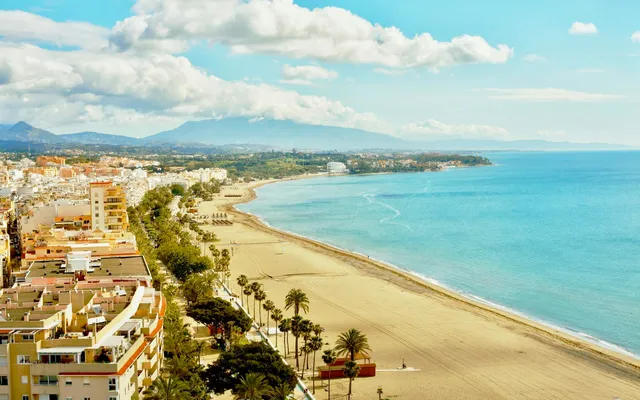
What time is sunset in Sotogrande and Estepona?
4 min read
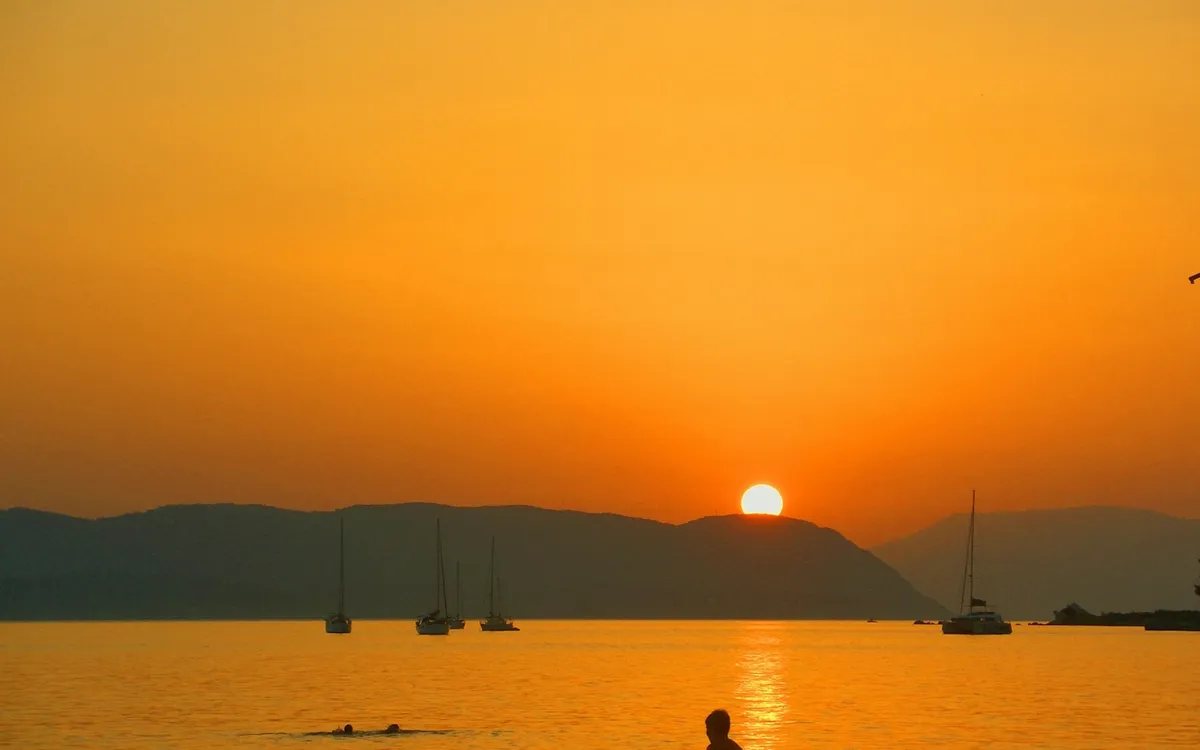
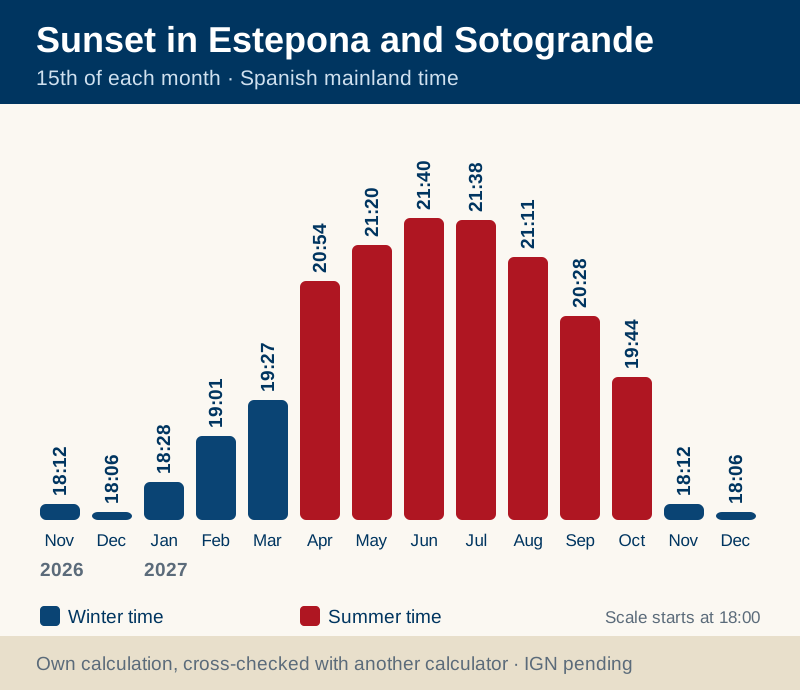
What time does it get dark in Estepona and Sotogrande? This table gives the sunset time and the end of civil twilight on the 15th of each month, from November 2026 to December 2027, in Spanish mainland time. It helps you plan a walk, a photo or a sunset sail. In December the sun sets at about 18:06; in June, at about 21:40.
Sunset table
| Month (15th) | Sunset, Estepona | Sunset, Sotogrande | End of civil twilight, Estepona | Sunset direction (°) |
|---|---|---|---|---|
| November 2026 | 18:12 | 18:12 | 18:39 | 247° |
| December 2026 | 18:06 | 18:07 | 18:35 | 241° |
| January 2027 | 18:28 | 18:29 | 18:56 | 244° |
| February 2027 | 19:01 | 19:01 | 19:27 | 255° |
| March 2027 | 19:27 | 19:28 | 19:53 | 268° |
| April 2027 | 20:54 | 20:54 | 21:21 | 283° |
| May 2027 | 21:20 | 21:20 | 21:48 | 294° |
| June 2027 | 21:40 | 21:40 | 22:10 | 300° |
| July 2027 | 21:38 | 21:38 | 22:08 | 298° |
| August 2027 | 21:11 | 21:11 | 21:38 | 288° |
| September 2027 | 20:28 | 20:29 | 20:54 | 274° |
| October 2027 | 19:44 | 19:45 | 20:10 | 260° |
| November 2027 | 18:12 | 18:13 | 18:39 | 247° |
| December 2027 | 18:06 | 18:07 | 18:35 | 241° |
Clock changes: summer time starts on 28 March 2027 and ends on 31 October 2027; the table already includes it. The difference between Sotogrande and Estepona is 0 to 1 minute.
How to read the table
- Sunset: the moment the upper edge of the Sun disappears below the horizon. It is calculated with a zenith angle of 90°50′, which includes atmospheric refraction and the Sun’s radius.
- End of civil twilight: the Sun is 6° below the horizon; after that you need artificial light. It is the practical reference for how long daylight lasts.
- Nautical and astronomical twilight: with the Sun 12° and 18° below the horizon; the first marks when the horizon line at sea stops being clearly visible and the second, a fully dark sky.
- Sunset direction: in degrees from north (90° is east, 180° south and 270° west). In winter the sun sets towards the west-southwest (about 241° in December) and moves towards the northwest in summer (about 300° in June).
- How much it changes: from one day to the next the time moves by at most about 1 minute later (late January) or 1.5 minutes earlier (late September). The 15th is just a reference for the month.
How we calculated it
We used the standard astronomical equations for the Sun’s position (those of Jean Meeus and NOAA) for Estepona (36.428° N, 5.145° W) and Sotogrande (36.285° N, 5.280° W). We then cross-checked Estepona against an independent public calculator: the maximum difference over the 14 dates is 0.4 minutes. We could not consult the official tool of the National Astronomical Observatory (IGN); if you need an exact time for something critical, compare it with that tool.
Seeing it from the water
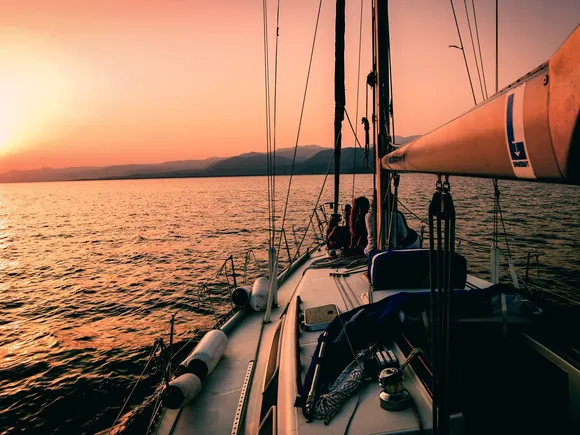
If you would like to watch the sunset from the sea, see our sunset sailing trips from Sotogrande and from Estepona; the boarding time is on each experience page. To get to the area by public transport, read the Estepona–Sotogrande bus (M-240).
To organise the rest of your trip, read the guides to Sotogrande and Estepona.
Frequently asked questions
What time does it get dark in Estepona in December?
On 15 December 2026 the sun sets at 18:06 and civil twilight ends at 18:35.
What time is sunset in June?
On 15 June 2027, at 21:40; civil twilight ends at 22:10.
Is there a difference between Sotogrande and Estepona?
Very little: 0 to 1 minute, because Sotogrande is about 15 km to the southwest.
Are these times official?
They are our own astronomical calculation, cross-checked with another calculator. The official IGN tool could not be consulted.
Sources
- Jean Meeus, Astronomical Algorithms (2nd ed., Willmann-Bell, 1998) and NOAA · Solar Calculation Details (equations used).
- Sunrise-Sunset · public calculator API (cross-check).
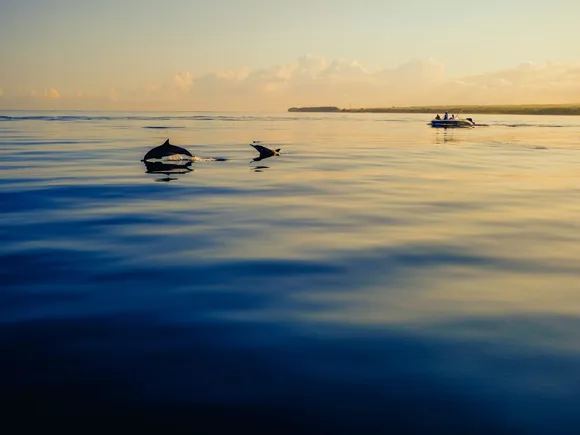
- Photo: Matteo Ulisse (Unsplash). Infographic: our own work using the calculation described.
Last checked: 26 October 2026. The times are calculated and may differ by a minute or two from other sources because of terrain and real refraction.